
Content:
Video
Ocular burn by lye on cell cultures, simulated ocular burn with sodium hydroxide (NaOH)
Continuing Education
Emergency treatment to the eye is also a topic of continuing education courses that ACTO offers to physicians.
Experimental research and clinical treatment allow the development of new forms of therapy
Better Prognosis for Ocular Burns
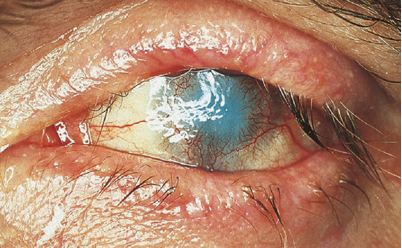
Primary medical care of chemical burns of the eye is decisive for the outcome of accidents that often occur at work and at home. Sometimes the accident involves liquid metal — other times, steam or the notorious squirt of lime. New forms of therapy have been a focus of Professor Dr. Schrage’s research for over 15 years. Since then, many ocular burns could be prevented or be treated considerably better thanks to clinical recommendations resulting from this research. Today this enables those patients to see, who would have previously gone blind years ago.
Patients who wish to profit from the expertise of Professor Dr. Schrage at the Cologne Merheim Eye Clinic are requested to call: phone +49 (0)221/8907 13812. The respective research is being organized jointly by ACTO e.V. and RWTH Aachen University.
The driver of this research and its clinical monitoring is Prof. em. Dr. med. Martin Reim, who since his retirement has remained very engaged in experimental research and who is an active and consulting executive board member of ACTO. The eye clinics at RWTH Aachen and Cologne-Merheim have been able to substantially benefit from the valuable treasure of clinical experience in the acute care of ocular chemical burns but also in the subsequent therapy. On this basis, long-term research concepts can be developed.
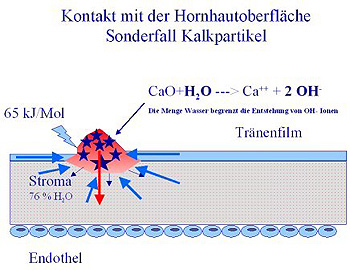
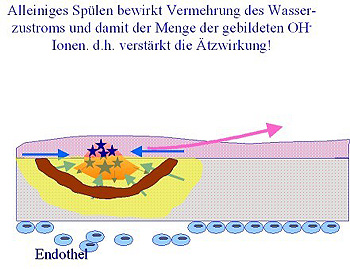
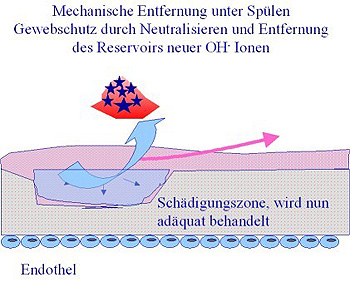
Innovative approaches for treating early-stage burns have been investigated in the past years, after physicochemical effects could be presented in detail during the early stage of an ocular burn. Measurements have led to a concept of chemical and osmotic shock.
Decisive Factors
For the prognosis, decisive physical factors include:
- Exposure time
- Temperature
- Mechanical energy upon penetration into the eye
- Concentration
- pH-value
- Osmolarity
Chemical factors, for example, include the reactions of proteins and lipids — i.e. precipitation, loss of function, activation or saponification, lipolysis, but also the feared binding of calcium during the hydrofluoric acid-induced ocular burn.
Decisive for therapy success are
- rapid mechanical removal of the aggressive substance,
- stopping further chemical reactions, and
- preventing a further penetration into the tissue.
Experimental Monitoring
Through experimental work on substances available on the market, this concept has been examined as a first treatment. Systematically compared were the “first aid” therapies such as
- water,
- phosphate buffer, e.g. from Optima or in the highly concentrated form Plum-pH-Neutral®,
- a special formulation of borate buffer (Cedderoth Eye Wash Solution®),
- as well as NaCl 0.9,
- B. Braun Eye Wash,
- Diphoterine®,
- Previn®,
- Tima Oculav® and
- Hexafluorine®
with regard to chemical burns of the rabbit eye (ex vivo).
The research results indicate that a therapy with chemically neutralizing hyperosmolar eye washes (Plum-pH-Neutral®, Previn®, Diphoterine®) can avert greater damage and, thus, contribute to a better prognosis for the patients. By contrast, phosphate-containing eye washes, such as Plum-pH-Neutral® and Tima-Oculav®, may cause corneal calcifications as a frequent side effect. Thus, we cannot recommend their application according to our clinical and experimental results.
Furthermore, compared to 2 % calcium gluconate and water, the anti-hydrofluoric acid solution by PREVOR (Hexafluorine®) showed a definite gradation and proved itself superior for treating HF-induced ocular burns on hand of decontamination tests via Ex Vivo Eye Irritation Test (EVEIT) and by means of optical coherence tomography (OCT).
In-depth information
- DOC: Application for benefits under the Victim Protection Act
(in German) - PDF: burn therapy
(in German) - PDF: Stem cell transplantation in severe burns May 2019
(in German) - PDF: Clinical Recommendations for Treating Chemicals Burns
(in German) - PDF: Data sheet for serious ocular (chemical) burns
(in German)

