
An alternative and more meaningful immunization against Covid‑19
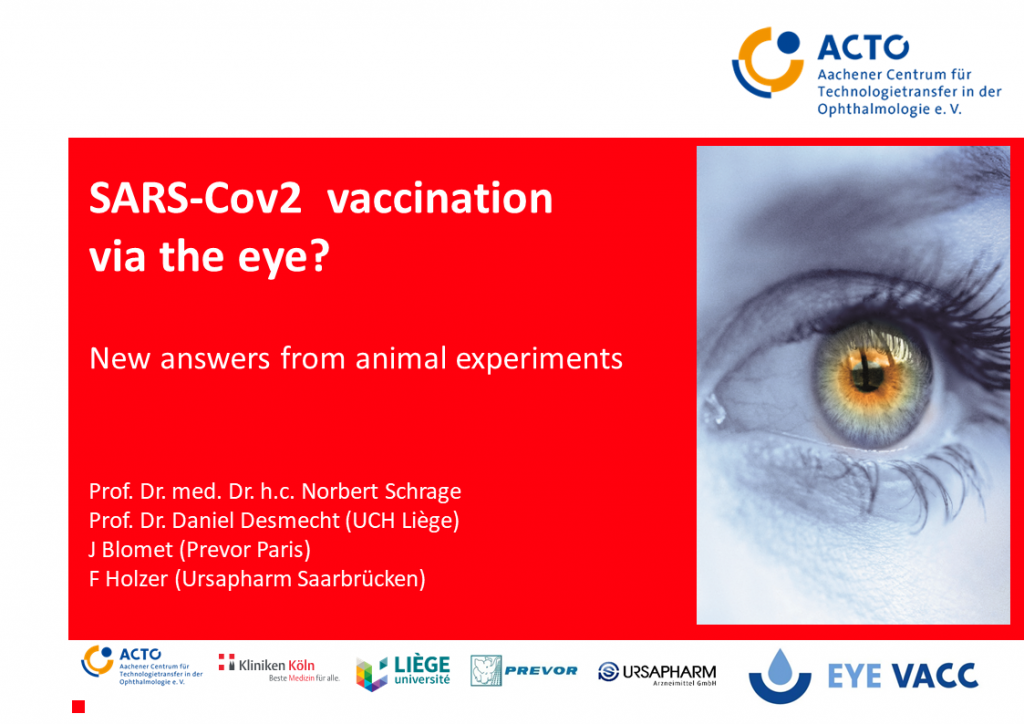
The presentation on this topic can be found below.
Clearly, clinical studies now show that the existing vaccines most likely protect against severe Covid‑19 disease.
The longer the pandemic continues, the clearer it becomes that immunization via intramuscular injection does not prevent infection itself, and that vaccinated individuals who become infected with Covid‑19 can continue to spread the virus—often without noticing it, because they experience few symptoms.
The vaccination strengthens the immune defense and protects against severe illness, which is indeed its most important task, but it does not create sterile immunity, which would be necessary to completely eliminate the virus.
Our Approach
Since SARS‑CoV‑2 infection occurs through the mucous membranes and viral replication also takes place mainly there, immunization should begin — or be strengthened — at that location. The site of first viral contact plays a major role in achieving an optimal immune response.
A nasal vaccination seems obvious, and several clinical studies are already underway.
However, the nasal mucosa is directly connected to the brain via the olfactory bulbs, making the development of a safe nasal spray difficult.
A less obvious mucous membrane covers the eye.
Every day, throughout life, the eye is bombarded with droplets full of viruses and effectively repels all these attacks. So why not use an existing vaccine, highly diluted, and apply it as drops into the conjunctival sac of the eye?
If the first contact with the virus occurs here, a corresponding immune response with the formation of IgA should be detectable — and ultimately, sterile immunity could potentially be achieved.
Animal Experiments
Since infection with SARS‑CoV‑2 occurs through the mucous membranes and viral replication also takes place primarily in these membranes, immunization should begin there — or be strengthened there — because the location of the first contact with the virus plays a major role in achieving an optimal immune response. Vaccination via the nose seems obvious, and several clinical studies on this are already underway.
However, the nasal mucosa is directly connected to the brain via the olfactory bulbs, which makes the development of a safe nasal spray difficult.
A less obvious mucous membrane covers the eye. Day after day, throughout a lifetime, the eye is bombarded with droplets full of viruses and effectively repels all these attacks.
So why not use an existing vaccine, highly diluted, and apply it as drops into the conjunctival sac of the eye? If the first contact with the virus occurs here, a corresponding immune response with the formation of IgA should be detectable — and in this way, sterile immunity could ultimately be achieved.

